Seals, sea eagles and otters from a Tromsø kayak
The sheltered bays west of Tromsø keep a small, steady cast of animals through the winter. Grey seals, white-tailed sea eagles, sea ducks and, with luck, an otter are all possible, but no tour can promise any of them. Below, which tour names which animal, and how to watch from a kayak without spoiling the moment.
Who stays for the winter on Kvaløya
The bays of Kvaløya stay open all winter, even on days when the air on shore sits below freezing. The animals that feed in them have no reason to leave when the dark months arrive.
That makes the cold season quieter but steadier for wildlife than many visitors expect. You will not meet crowds of seabirds as in summer, yet the residents are there, and they are used to the slow shapes of kayaks.
What you see on a given day depends on the bay and the tide, and on plain luck. The tour listings name the same short cast again and again, so the sections below take each animal in turn, starting with the one most people book for.
Grey seals in KaruArctic's home bay
KaruArctic paddles from Håkøybotn, a bay on Kvaløya that its guide calls home. Grey seals spend the winter there, and the listing says they often come close and sometimes follow the kayaks for a stretch.
The guide never paddles toward them. You sit still or move slowly, and the seals decide how near they come. The same listing says plainly that it cannot promise them, which is the honest way to sell a wildlife trip.
KaruArctic's 5-hour seal tour at ~$204 takes up to six people. Its reviews average a full 5.0 on both booking sites, a small base but a spotless one.
Harbor seals are possible in the same waters. They are smaller than grey seals and rounder in the face. Telling the two apart from a low kayak seat is a good question to put to the guide.
Six kayaks in a seal bay
KaruArctic keeps the group to six and rides the public bus with you out to Håkøybotn. Read the height and weight limits on the listing before you book.
Sea eagles over the fjord
The white-tailed eagle is Norway's largest bird of prey, with a wingspan of over 2 m (about 7 ft). In winter they sit on shore rocks and trees above the water, then glide out low when something catches their eye.
Every tour on this site names sea eagles as a possibility, from Destination Tromsø's classic wildlife day at ~$254 to Steam Tours' pier at Eidkjosen. They are the sighting you are most likely to get, though still not a sure one.
Look for a dark shape perched on a skerry, or a broad, flat-winged bird circling over the slope. Young eagles are brown all over, while adults show a pale head and a short white tail.
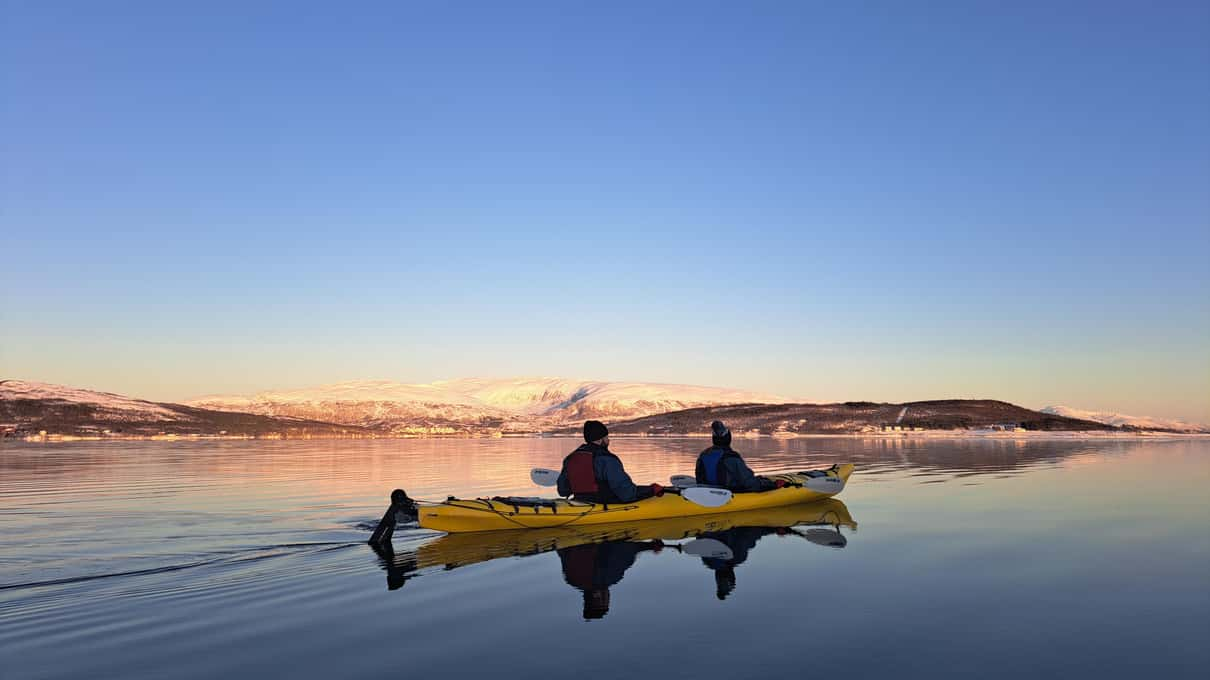
Otters and sea ducks, plus the odd porpoise
Destination Tromsø's easy-going doubles tour at ~$227 lists otters as possible in the channels of Kaldfjorden and Eidkjosen. Eurasian otters hunt along rocky shores and are shy, so treat one as a bonus.
Steam Tours names eiders and long-tailed ducks on its fjord paddles, and sometimes harbor porpoises. A porpoise shows as a small dark back and fin that rolls once and is gone.
The sea ducks are the steadiest sight of the lot, floating in loose groups near the shore. Cormorants and gulls fill in the rest, and on a slow day they are what keeps the guide pointing.
Steam Tours' two listings are new, with no reviews yet, so there is no traveler record of what people actually saw there. Their animal list comes from the operator alone.
Whales are a separate boat trip
Orcas and humpback whales feed in fjords further north of Tromsø in some winters. A kayak tour on the bays of Kvaløya does not go looking for them, and no listing on this site promises them.
If whales are the goal, book a whale boat trip on another day and keep the kayak outing for seals and eagles. Our plan for a paddle by day and an aurora chase by night shows how a kayak tour fits into a short stay.
How to watch from a kayak
A kayak is quiet and sits low on the water, which is why seals often tolerate it. The way to keep that trust is to stay together and let the animal come to you.
- Keep your distance and follow the guide's lead
- Never feed seals or birds, not even scraps from the snack
- Stop paddling if a seal surfaces close, and let it pass
- Keep voices low and point things out to the group quietly
- Back off if an animal changes what it is doing because of you
Your guide watches these animals all winter and will tell you when to hold back. On KaruArctic's tour the no-approach rule is written into the listing itself.
Cameras and binoculars on the water
Binoculars are awkward in a kayak. You need both hands on the paddle, and in a double your partner needs you to keep the rhythm, so most people leave them packed and trust the guide's eyes.
A phone in a dry bag or on a lanyard is the usual answer, but ask the guide what they allow before you launch. Cold drains batteries fast, so keep the phone in an inside pocket until a seal or eagle appears.
KaruArctic includes photos from the tour in the price, which frees you to watch instead of filming. Low winter light shapes every picture, and our guide to the dark weeks and the returning sun explains how it changes across the winter.
Cold fingers make a touchscreen hard work, so see our notes on layers under the drysuit and gloves. To pick a tour by the animals it names, compare the five tour shapes and the bays each one paddles.